Nutrition · 6 min read
Recommended Dietary Allowances: what Nigeria's own numbers actually are
Why the %RDA on a Nigerian food label isn't the same figure used abroad, and NAFDAC's own daily reference numbers for protein, salt, iron, vitamin A and more.
By the TarragonHealth editorial team
What "RDA" actually means, and why Nigeria has its own numbers
A Recommended Dietary Allowance is not a personal target or a diagnosis; it's a planning number, the amount of a nutrient estimated to meet the needs of almost everyone in a healthy population. It exists to guide food policy and food labels, not to tell any one person exactly what to eat.
The %RDA printed on a packet in Lagos isn't calculated against the same reference numbers as one printed in London, Singapore or the United States. Nigeria has its own legally binding figures, called Nutrient Reference Values, set out in NAFDAC's Food Fortification Regulations. They're adapted from the Codex Alimentarius standard, the joint WHO/FAO food-standards body that most countries build their own national numbers from, which is why they're similar to other countries' figures but rarely identical.
The big three: energy, protein and salt
Nigerian food labels are built around a reference intake of 2,000 kilocalories a day for an average adult, more for a very active person or someone breastfeeding, less for someone smaller or older. It's a starting point for comparing products, not a number to hit exactly every day.
Protein's reference figure is 50 grams a day, comfortably covered by a normal Nigerian diet that includes beans, fish, eggs, meat or dairy at most meals, even without deliberately tracking it.
Salt is the number worth the most attention. The official ceiling is 2,000 milligrams of sodium a day, roughly a level teaspoon of salt, and that includes what's already in bread, seasoning cubes, and anything packaged or eaten out, not just what's added at the table. Balancing it is potassium, found in beans, plantain and leafy vegetables, which the guidance says most adults should reach at least 3,500 milligrams of a day.
Vitamins and minerals: the numbers on a Nigerian label
These are the figures NAFDAC requires a manufacturer to test a product against before printing a claim like '30% of your daily vitamin C.' A few worth knowing: vitamin A 800 micrograms, vitamin C 100 milligrams, vitamin D 5 micrograms, calcium 1,000 milligrams, iron 14 milligrams, zinc 11 milligrams, and iodine 150 micrograms. Folate sits at 400 micrograms and vitamin B12 at 2.4 micrograms, both worth knowing if you're pregnant or planning to be.
Three of those are already engineered into the Nigerian food supply. NAFDAC mandates vitamin A and iron fortification of milled wheat and maize flour, vitamin A fortification of vegetable oil, sugar and margarine, and iodine in table salt, precisely so that ordinary cooking with a genuine, properly labelled brand already delivers a meaningful share of the day's number without anyone having to think about it.
Why iron and folate deserve special attention here
Iron matters more in Nigeria than the 14 milligram reference figure alone suggests. The last Nigeria Demographic and Health Survey found anaemia in well over half of women of reproductive age, and in more than three in five pregnant women, a gap the general adult reference number was not designed to close on its own.
Pregnancy needs more than the general figure, which is why antenatal iron-folate tablets exist as standard care: World Health Organisation guidance calls for 30 to 60 milligrams of iron and 400 micrograms of folic acid daily throughout pregnancy, with the higher end of that iron range specifically recommended wherever anaemia in pregnancy is already common, which, given the numbers above, describes most of Nigeria. It's a supplement layered on top of food, not a replacement for it.
On the food side, iron from meat, liver and fish is absorbed more easily than iron from beans or leafy vegetables like ugu, but pairing a plant source with vitamin C, an orange after a bean meal, for instance, measurably improves how much of it the body actually takes up.
What this looks like on a Nigerian plate
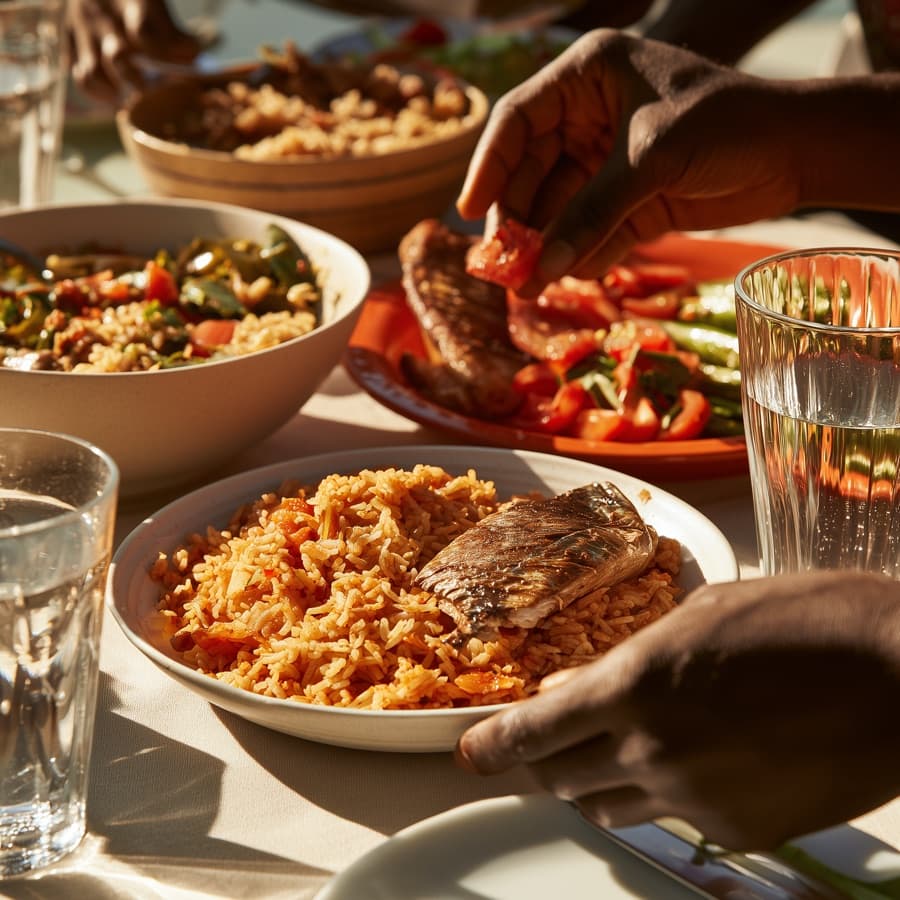
Nigeria's own food guide, developed with the Federal Ministry of Health and the FAO, sets this out as a pyramid rather than a set of numbers: grains and tubers like rice, garri and yam form the base and belong at every meal; vegetables and fruit sit alongside them, also at every meal; protein foods, fish, eggs, meat and dairy, come in moderate portions rather than as the main event; oils and fats are used sparingly; and sweets and sugary drinks stay occasional, with plenty of water throughout the day.
A fairly ordinary Nigerian day, pap or akara for breakfast, rice and beans or a swallow with vegetable soup for the main meals, meets most of these numbers without any special foods, supplements or counting. The two genuine gaps worth a specific conversation with a doctor rather than guesswork are iron and folate during pregnancy, and vitamin D for anyone who spends most of daylight hours indoors.
This article is general health information, not medical advice, a diagnosis, or a treatment plan. Always talk to a doctor about your own situation, and if you feel seriously unwell, go to a hospital now.